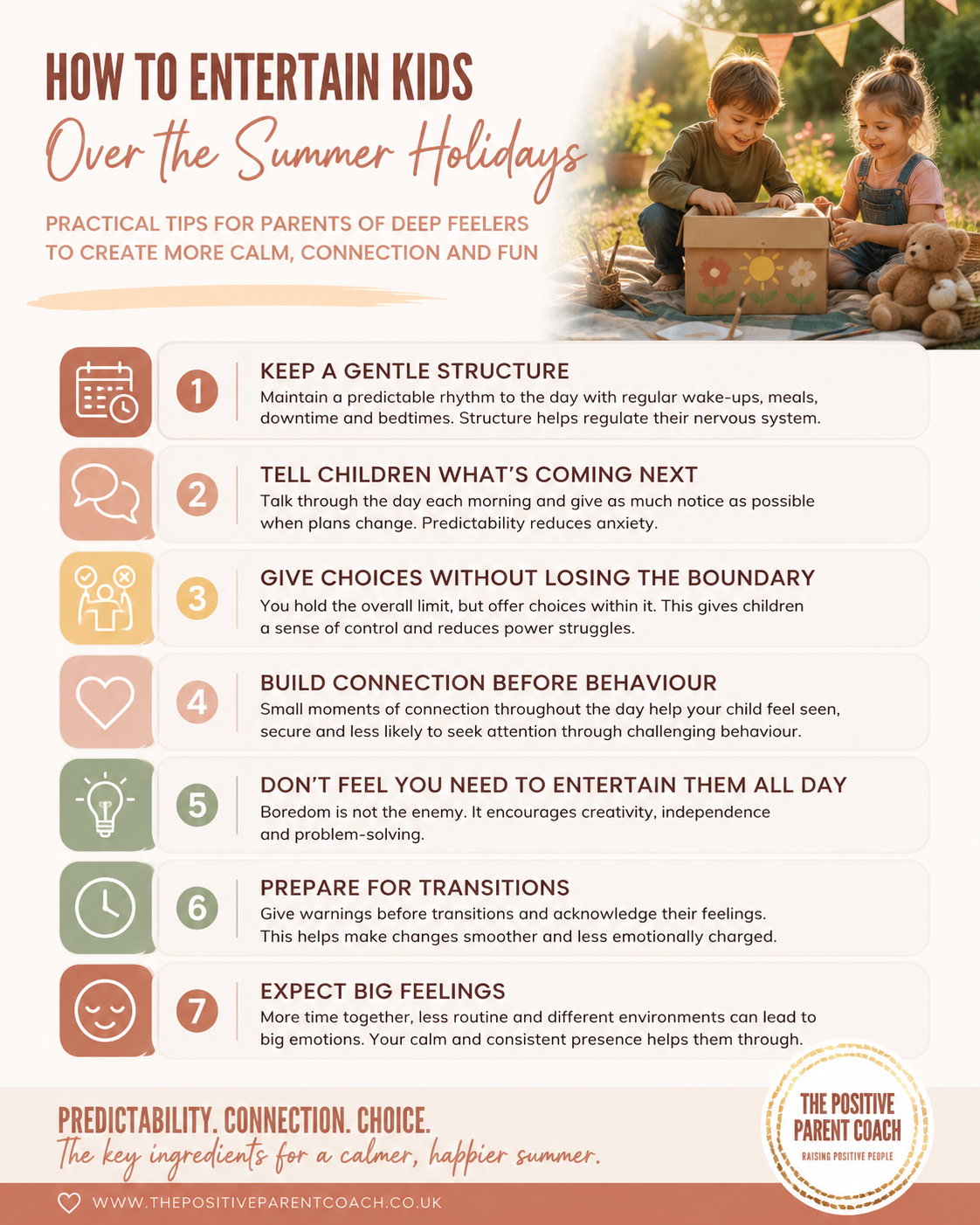
How to Keep Kids Entertained During the Summer Holidays (Without Losing Your Sanity): A Guide for Parents of Deep Feelers
The summer holidays can feel like a dream... until the novelty wears off.
For many families, especially those parenting deep feelers, children with big emotions, or those who are neurodivergent, the lack of routine can quickly lead to increased meltdowns, sibling arguments, boredom, and emotional overwhelm.
If your child seems to cope well during term time but struggles during the holidays, you're certainly not alone. It's easy to think they simply need more to do, but often the challenge runs much deeper.
As a trauma-informed parenting coach, one of the biggest things I see during the summer is children struggling with the sudden loss of predictability. Their nervous system has become used to a certain rhythm throughout the school year, and when that disappears overnight, they can feel dysregulated without fully understanding why.
The good news? You don't need to fill every minute with expensive activities.
Instead, focus on creating an environment where your child feels safe, connected and knows what to expect.
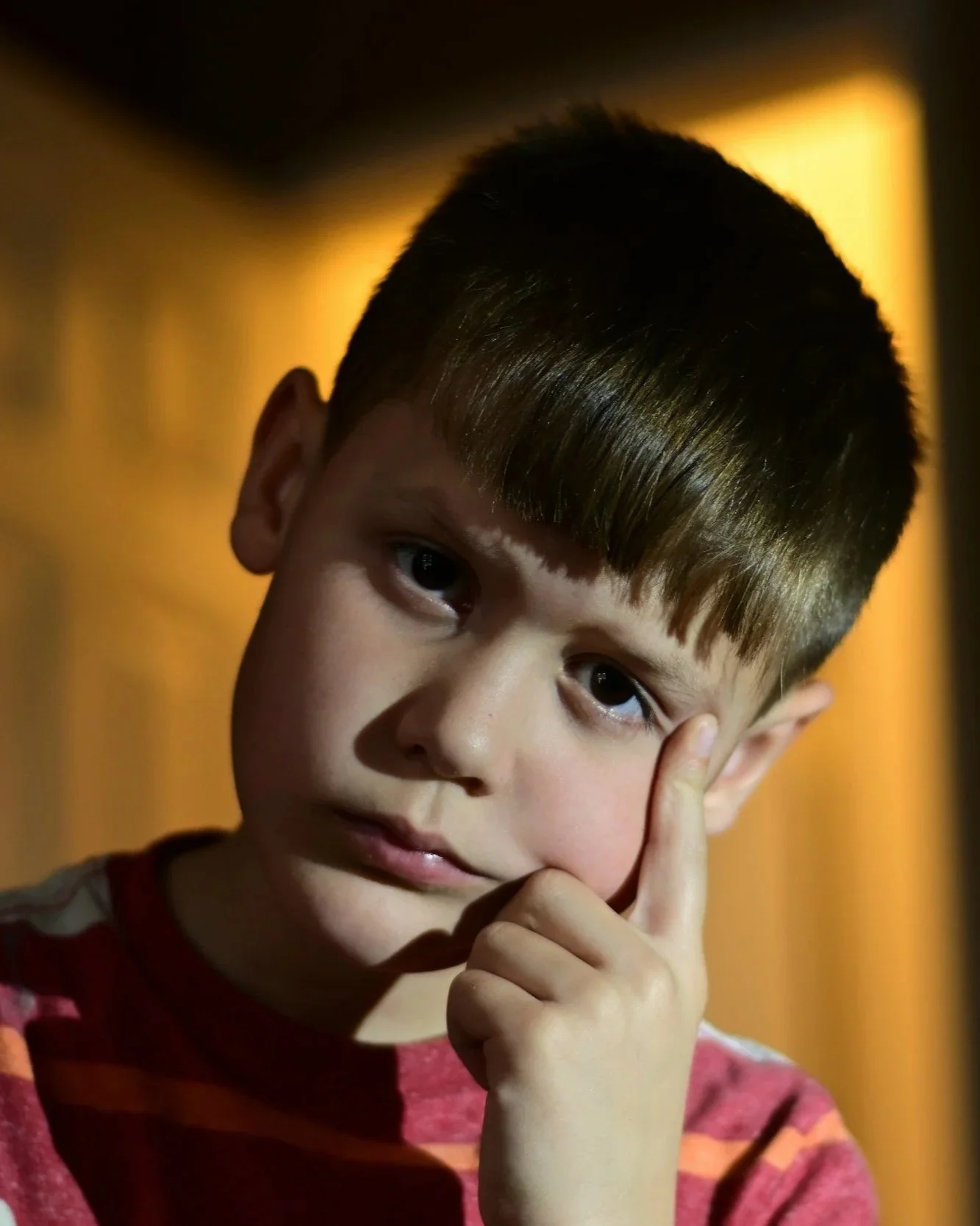
Why Summer Holidays Can Be Hard for Deep Feelers
Children who experience emotions intensely often rely more heavily on routine than we realise.
During the school term they know:
What time they'll wake up.
When they'll eat.
Who they'll see.
What happens next.
When they'll be home.
Although they may complain about school routines, those predictable patterns actually help regulate their nervous system.
When the holidays arrive, everything changes.
Wake-up times become inconsistent.
Meals drift.
Plans vary daily.
Parents may be working.
Different family members are around.
Bedtimes move later.
Whilst this flexibility can feel exciting to some children, for deep feelers it can create uncertainty, and uncertainty often leads to emotional dysregulation.
Rather than seeing more challenging behaviour, try asking yourself:
"What does my child need in order to feel safe and predictable today?"
1. Keep a Gentle Structure
One of the biggest misconceptions is that holidays should have no routine. In reality, children benefit from having a structure that resembles school term life, even if it is much more relaxed. You don't need to recreate school.
Instead, think about keeping:
Similar wake-up times.
Regular meal times.
Predictable snack times.
Daily movement.
Quiet downtime.
A consistent bedtime routine.
Your child doesn't need every day to look identical. They simply need confidence that there is a rhythm to the day.
A simple visual timetable can work brilliantly, particularly for younger children and neurodivergent children.
2. Tell Children What's Coming Next
One of the quickest ways to reduce anxiety is by increasing predictability. Each morning, spend a few minutes talking through the day.
For example: "This morning we're staying home. After lunch we're going swimming. Then we'll come home, have dinner and watch a film together."
Knowing what is coming next reduces uncertainty and helps children transition between activities more successfully. If plans change, tell them as early as possible.
Deep feelers generally cope much better with expected change than unexpected change.
3. Give Choices Without Losing the Boundary
Children have a fundamental need for autonomy. When they have no sense of control, they're much more likely to seek it through arguing, refusing or challenging boundaries. The key is remembering that you hold the overall limit, while they have choices within it.
For example: Instead of saying: "We're going to the park." Try: "We're going to the park this morning. Would you like to take your football or your scooter?" Or: "This afternoon we're staying home. Would you like to build a den or do some baking together?"
The destination hasn't changed. But your child feels involved.
This simple shift can dramatically reduce power struggles.
4. Build Connection Before Behaviour
Many children become labelled as "attention seeking." I prefer to think of them as connection seeking. Connection is not a reward for good behaviour. It is one of the things that helps create it. Rather than waiting until behaviour becomes difficult, sprinkle moments of connection throughout the day.
These don't need to be elaborate. Instead try:
Playing a five-minute game together.
Asking them to teach you something.
Sitting beside them while they build Lego.
Reading together.
Sharing a joke.
Going for a bike ride.
Sometimes the most regulating thing for a child is simply feeling noticed. Instead of saying "Good job," try noticing specifically what you see:
"I noticed how much concentration that took."
"Wow... tell me more about what you've created."
"Can you show me how you thought of that?"
These moments help children feel significant without needing to seek attention through challenging behaviour.
5. Don't Feel You Need to Entertain Them All Day
One of the biggest pressures parents put on themselves during summer is believing they need to provide constant entertainment. The reality is... Boredom isn't something to fear. It's where imagination, creativity and problem-solving often begin.
Instead of rushing to solve boredom, stay curious. You might say: "I'm interested to see what your brain comes up with." Or: "I wonder what we could create with what's already in the house?"
Children don't always need activities. Sometimes they simply need time.
6. Prepare for Transitions
Many deep feelers struggle less with the activity itself and more with moving between activities.
Leaving the park.
Turning off screens.
Getting into the bath.
Going to bed.
These transitions often trigger the biggest emotions.
Try giving countdowns before transitions:
"15 minutes left."
"10 minutes."
"Five minutes."
Then acknowledge the emotion: "I can see you're disappointed it's time to leave." Notice we don't need to remove the boundary.
We simply help them feel understood whilst holding it.
7. Expect Big Feelings
Big feelings during the holidays don't necessarily mean you're doing anything wrong. Your child's nervous system is processing:
More togetherness.
Less routine.
Different environments.
More sensory experiences.
Different expectations.
Your role isn't to stop those emotions. It's to become the calm, predictable adult who can help them move through them safely.

Summer Doesn't Have to Be Perfect
One thing you should remember this summer: Children don't remember perfect days. They remember how they felt.
The picnics, beach trips and expensive days out are wonderful, but they aren't what creates emotional security.
Feeling connected.
Feeling understood.
Knowing what to expect.
Having opportunities to make choices.
These are the moments that help deep feelers thrive.
So if you're wondering how to entertain your children this summer, perhaps the answer isn't about doing more.
Perhaps it's about creating a summer that feels predictable, connected and calm enough for everyone to enjoy.
Looking for More Parenting Support?
If you're parenting a child with big emotions, a deep feeler, or a neurodivergent child, and would like practical, evidence-informed strategies to support them, explore The Parenting Solutions Studio. Inside you'll find workshops, downloadable resources, printable guides, and monthly live coaching sessions designed to help you feel calmer, more confident, and more connected as a parent.