
Back to School Resistance: Why Your Child Is Struggling With the Transition and What You Can Do
Day 1 went brilliantly.
They ran through the school gates. They came out smiling. “It was Fantastic”
You breathed a sigh of relief. We've got this.
Then came Day 2.
Tears. Clinging. “I DON'T WANT TO GO!”
Maybe your child screamed for you as you walked away.
Maybe you had to walk back to the car and sit there with tears streaming down your own face.
And suddenly you're questioning everything.
Have we done the right thing?
What if they struggle all year?
What if this gets worse?
Should I be doing something differently?
If this sounds familiar, take a breath.
A difficult second day doesn't automatically mean school is wrong for your child.
In fact, what you're experiencing can be a very normal part of a big transition, particularly for children who feel things deeply.
Starting school is a BIG transition for a child's nervous system
We often think about starting school in practical terms.
New uniform. New shoes. New lunchbox.
Learning where the toilets are. Learning the classroom routine.
But from a child's perspective, school represents so much more.
They're suddenly navigating:
new adults
new children
a new environment
unfamiliar routines
separation from their parents
new expectations
social interaction
noise and sensory input
learning
following instructions
managing emotions
being more independent
That's a lot for any child. And for children who feel things deeply, the experience can feel particularly intense. This is why your child can be excited about school and still struggle with school.
They can genuinely love their teacher and still cry when you leave.
They can have a wonderful first day and then refuse to go on the second.
They can tell you they had a brilliant day and then have a huge meltdown as soon as they get home.
They can appear completely fine at school and then unravel over something tiny once they're back in the safety of home.
This doesn't necessarily mean something has gone wrong. It may simply mean that the transition is asking a lot of their nervous system.
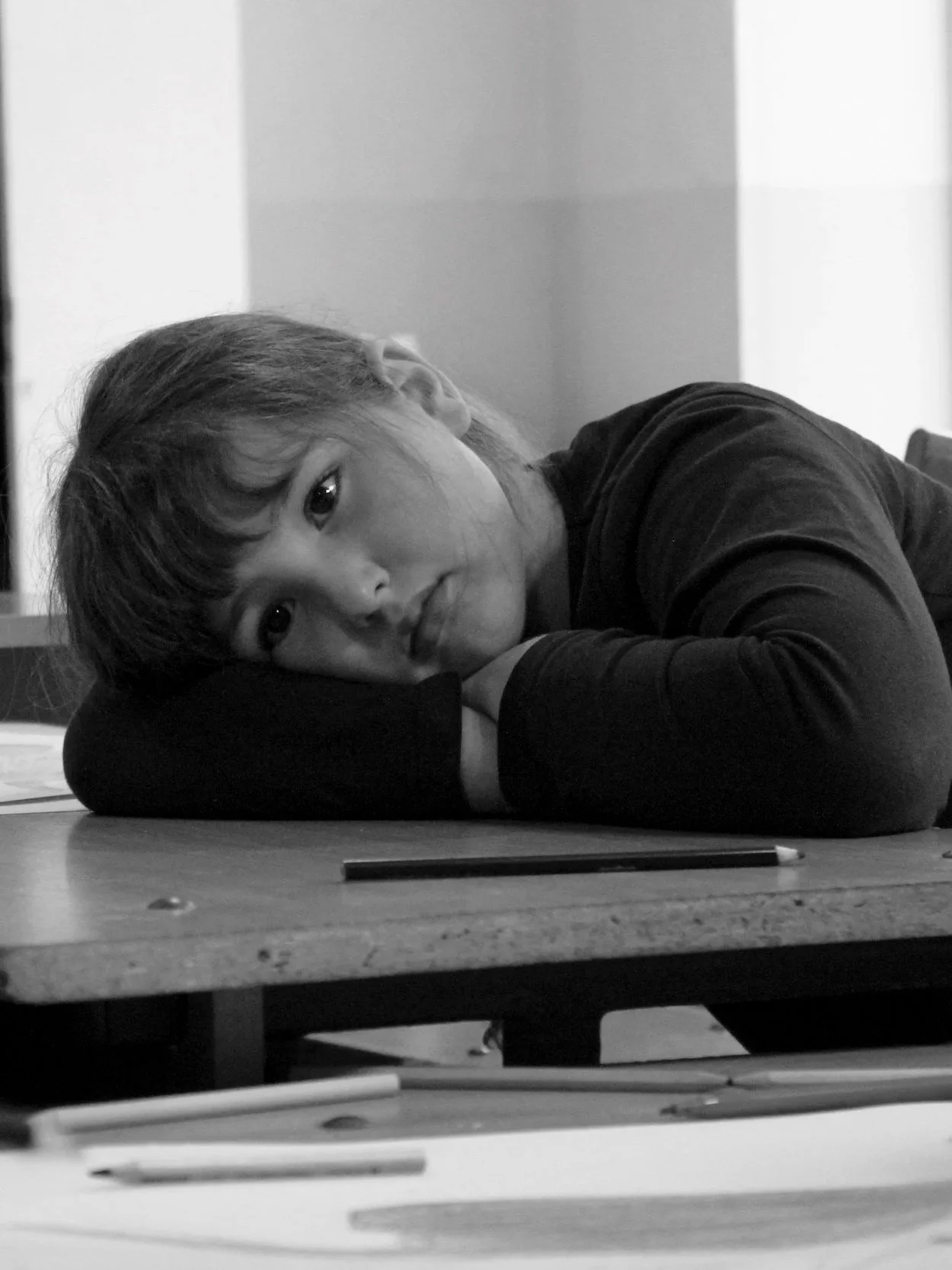
When behaviour changes, look underneath it
When children are overwhelmed, we often see their behaviour change.
They may become:
more resistant
more controlling
more emotional
more clingy
more angry
more tearful
more demanding
more sensitive to small things
more likely to say “I hate school”
more likely to melt down after school
And it's very easy to interpret this as: “They're being difficult.” “They're just refusing.” “They've suddenly become really naughty.”
But what if we paused before we jumped to that conclusion?
What if we asked: “What is happening underneath this behaviour?”
Behaviour as Information
Sometimes a child who is saying “NO!” over and over again isn't simply trying to make life difficult.
Their nervous system may be communicating:
“This is too much.”
“I don't feel completely safe yet.”
“I need you.”
“I need some control.”
“I don't know how to manage all of this.”
This doesn't mean we ignore challenging behaviour or remove every boundary.
It means we become curious about what the behaviour is telling us, so that we can respond more effectively.
And this is particularly important for Deep Feelers.
Why the transition can feel even bigger for Deep Feelers
Children who feel deeply can experience change, uncertainty, emotions and sensory experiences very intensely.
That doesn't mean every Deep Feeler will struggle with school.
But when a transition is demanding, we may see the impact more clearly. And sometimes the behaviour isn't even about school itself.
Your child may actually enjoy school. It may be the change, uncertainty and separation surrounding school that feels difficult.
This is why I don't want parents to immediately jump into: “How do I stop my child being anxious?”
Instead, I want you to consider a different question:
“What does my child's nervous system need from me right now?”
That question takes us away from simply trying to stop the behaviour and towards understanding and supporting the child underneath it.
Introducing the Back-to-School Confidence Framework
My simple framework to help you think about those difficult moments.
Back To School Framework - SECURE
Because before we can expect confidence, independence and flexibility, our children need to experience a sense of safety and security.
Here are the six steps:
S — SEE
What's happening?
Pause and notice what you're actually seeing.
Look beyond “They're refusing school” and start noticing the pattern.
When does the behaviour happen?
What happens before it?
What happens afterwards?
What has changed?
E — EXPLORE
What's underneath?
Get curious about what might be driving the behaviour.
Could it be overwhelm?
Uncertainty?
Separation?
Fatigue?
Sensory overload?
A need for connection?
A need for control?
We don't need to immediately know the answer.
We simply start looking beneath the behaviour.
C — CONNECT
What helps my child feel safe?
Connection and safety are incredibly important during times of transition.
This might involve creating familiar routines, predictable moments of connection or little reminders that your child is safe and connected to you even when you're apart.
Sometimes the smallest things can become powerful cues of safety.
U — UNDERSTAND
What does THIS child need?
And this is where things become really important.
Because there is no single strategy that works for every child.
What helps one child at the school gate may make another child feel more overwhelmed.
One child may need reassurance.
Another may need less talking.
Another may need movement.
Another may need a comfort object.
Another may need a familiar adult waiting for them.
Rather than collecting endless parenting strategies, we need to understand which support matches our individual child.
R — RESPOND
How can I respond without adding to the load?
Our response matters.
When a child's nervous system is already stretched, more pressure, lengthy explanations, threats, arguments or escalating emotions can add to the load.
Sometimes our child needs us to simplify.
To lower unnecessary demands.
To hold boundaries calmly.
To stay connected.
And to remember:
“My child is struggling. They are not giving me a hard time; they are having a hard time.”
That doesn't mean allowing behaviour that isn't okay.
We can be compassionate about the feeling while still holding a clear boundary around the behaviour.
E — ENCOURAGE
How can we build confidence over time?
Confidence isn't created by repeatedly telling a child:
“You're fine.”
“There's nothing to worry about.”
“You'll be okay.”
Confidence grows through experience.
Through being supported through something difficult.
Through discovering:
“I was worried — and I managed it.”
“I missed Mum — and Mum came back.”
“It felt unfamiliar — and then it became familiar.”
“I found it hard — and I got through it.”
That is how confidence begins to grow.
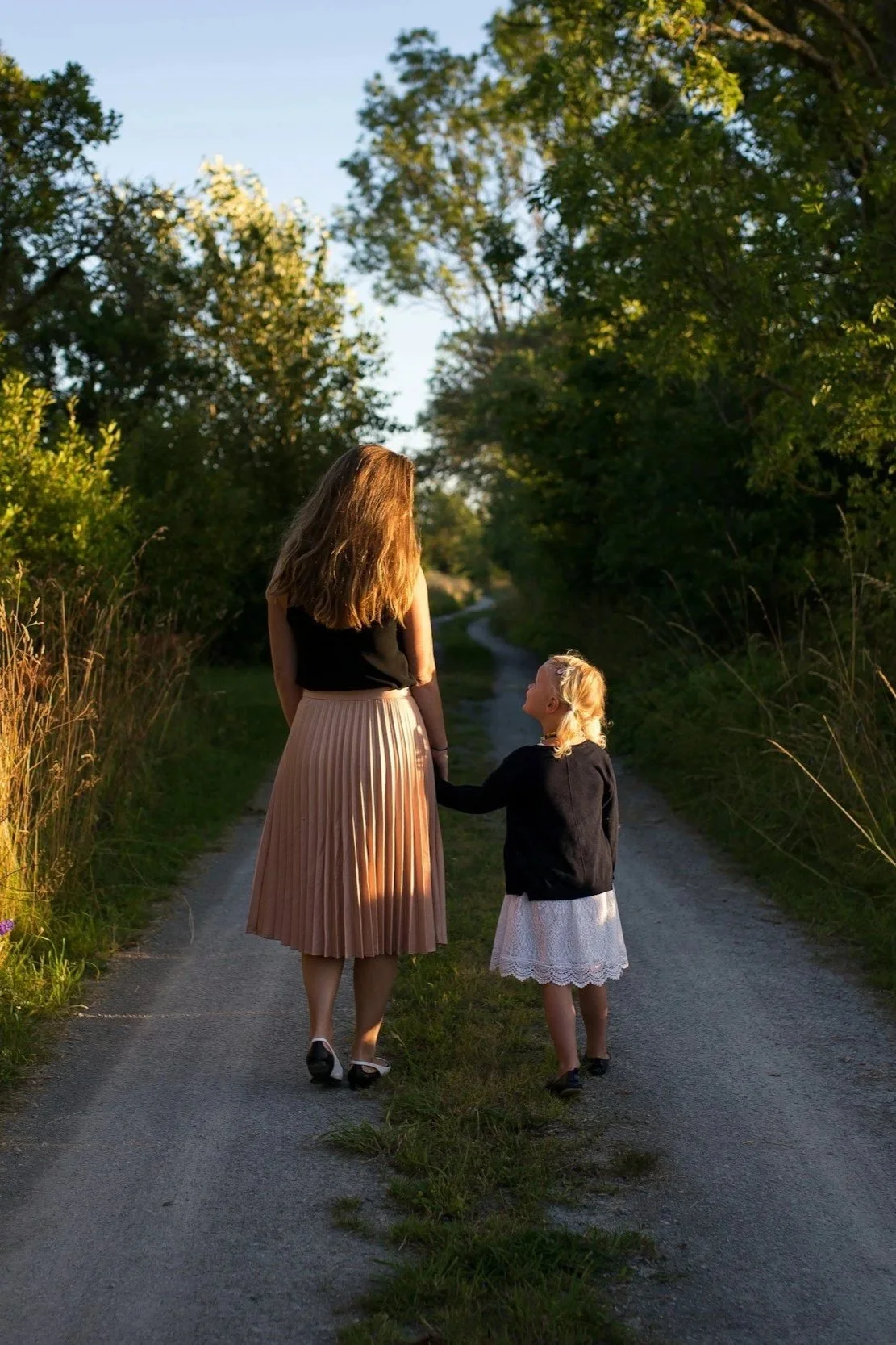
You don't need to solve the whole school year today
If your child has struggled this week, it's very easy to jump ahead.
What if they're still doing this at Christmas?
What if they never settle?
What if every morning is like this?
What if I've made the wrong decision?
But your child's nervous system doesn't need you to solve September, October, November and the rest of the school year today.
It needs you to help them navigate this moment.
And you don't need to get everything perfect.
You need to become their sturdy anchor.
Calm.
Consistent.
Connected.
Confident.
You can communicate:
“I know this feels hard. I'm here. You are safe. We will get through this together.”
You don't have to make the feelings disappear.
You don't have to convince your child that school is wonderful.
And you don't have to fix every wobble.
You can support them through it.
What does this actually look like for your child?
This is where the SECURE framework becomes much more than six words. Because knowing “I need to create safety” is one thing.
Knowing how to create safety for your particular child is another.
What does your child need at the school gate?
What could make mornings feel easier?
How can you support separation?
What can you do if your child is crying and clinging?
How can you respond when they refuse?
What happens when they come home and completely fall apart?
How do you hold boundaries when your child is overwhelmed?
And how do you support them without accidentally increasing the pressure?
These are the questions I explore in much more depth inside The Parenting Solutions Studio.
Inside the Studio, you'll find practical resources to help you understand your Deep Feeler, their nervous system and the reasons behind challenging behaviour, alongside support for school transitions, getting out of the door, boundaries, consequences, regulation and connection.
PLUS The Studio has all the key information on Back To School Confidence in one easy to understand guide which you can get your hands on straight away simply by being inside The Studio.
The Back-to-School Confidence Framework gives you the map.
Inside The Studio, I help you work out how to use it with YOUR child.
Because your child doesn't need another generic list of things to try.
They need to be understood.
And you need to feel confident about what to do next.
Come and join us inside The Parenting Solutions Studio.
You don't need to work out the whole school year.
You just need to understand what your child needs right now, and take the next step from there.