When “Santa’s Watching” Becomes a Parenting Tool, and Why It Can Backfire
During the festive season, many parents find themselves reaching for familiar phrases to manage behaviour:
“Santa’s watching.”
“The elves will tell Santa.”
“Do you want to stay on the good list?”
In the moment, these tactics can appear effective. Behaviour changes quickly. Calm returns.
But beneath the surface, these strategies rely on fear-based parenting, and while fear can create short-term compliance, it can undermine long-term emotional development, trust, and connection.
As a positive parenting coach, I support parents who want to move away from threats, bribes, and punishment — especially during emotionally charged times like Christmas.
Let’s explore why fear-based behaviour management can backfire, and what works better instead.

Why Parents Use Fear-Based Strategies at Christmas
The festive period is intense for families.
Children are often:
Overtired
Overstimulated
Out of routine
Experiencing big emotions
When a quick sentence stops a meltdown, it’s understandable to use it. Most parents aren’t choosing fear intentionally — they’re choosing survival.
However, behaviour managed through fear doesn’t equal emotional learning.
The Problem With “Santa’s Watching” as a Behaviour Tool
Using Santa or elves as a form of surveillance teaches children one key message:
“I behave because I’m being watched — not because I understand or choose to.”
This can lead to several unintended consequences.
1. It Can Increase Anxiety in Children
Some children internalise the idea that they are constantly being monitored or judged. This can heighten:
Anxiety
People-pleasing behaviours
Fear of making mistakes
These children may appear “well behaved” but feel emotionally unsafe.
2. It Can Damage Trust and Connection
When children eventually realise Santa and elves aren’t real, some experience:
Confusion
Betrayal
Loss of trust in adult honesty
Strong parent-child relationships are built on safety and trust — not control.
3. It Can Backfire (and Be Used Against You)
Children learn how relationships work by watching us.
I’ve worked with families where children begin to say:
“Santa won’t bring you presents if you shout.”
“I’ll tell Santa you weren’t kind.”
This isn’t manipulation — it’s modelling. When fear is used as a tool, children learn fear is acceptable in relationships.
What Fear-Based Parenting Doesn’t Teach
Fear may stop behaviour, but it doesn’t teach children:
Emotional regulation
Empathy
Problem-solving
Accountability
Internal motivation
It teaches children to behave when someone is watching, not because it aligns with their values.
Positive parenting focuses on raising children who make thoughtful choices, even when no one is observing.
What Works Better: Positive Parenting at Christmas
Children are far more capable of cooperation when they feel:
Emotionally safe
Seen and understood
Connected to their caregiver
This doesn’t mean permissive parenting or no boundaries.
It means setting limits with compassion instead of threats.
Positive Parenting Alternatives to “Santa’s Watching”
Instead of fear-based language, try:
Curiosity: “Something feels hard right now — what’s going on?”
Compassion: “I can see you’re overwhelmed.”
Connection: “I’m here. Let’s figure this out together.”
These approaches support emotional learning and reduce power struggles, even during the festive season.
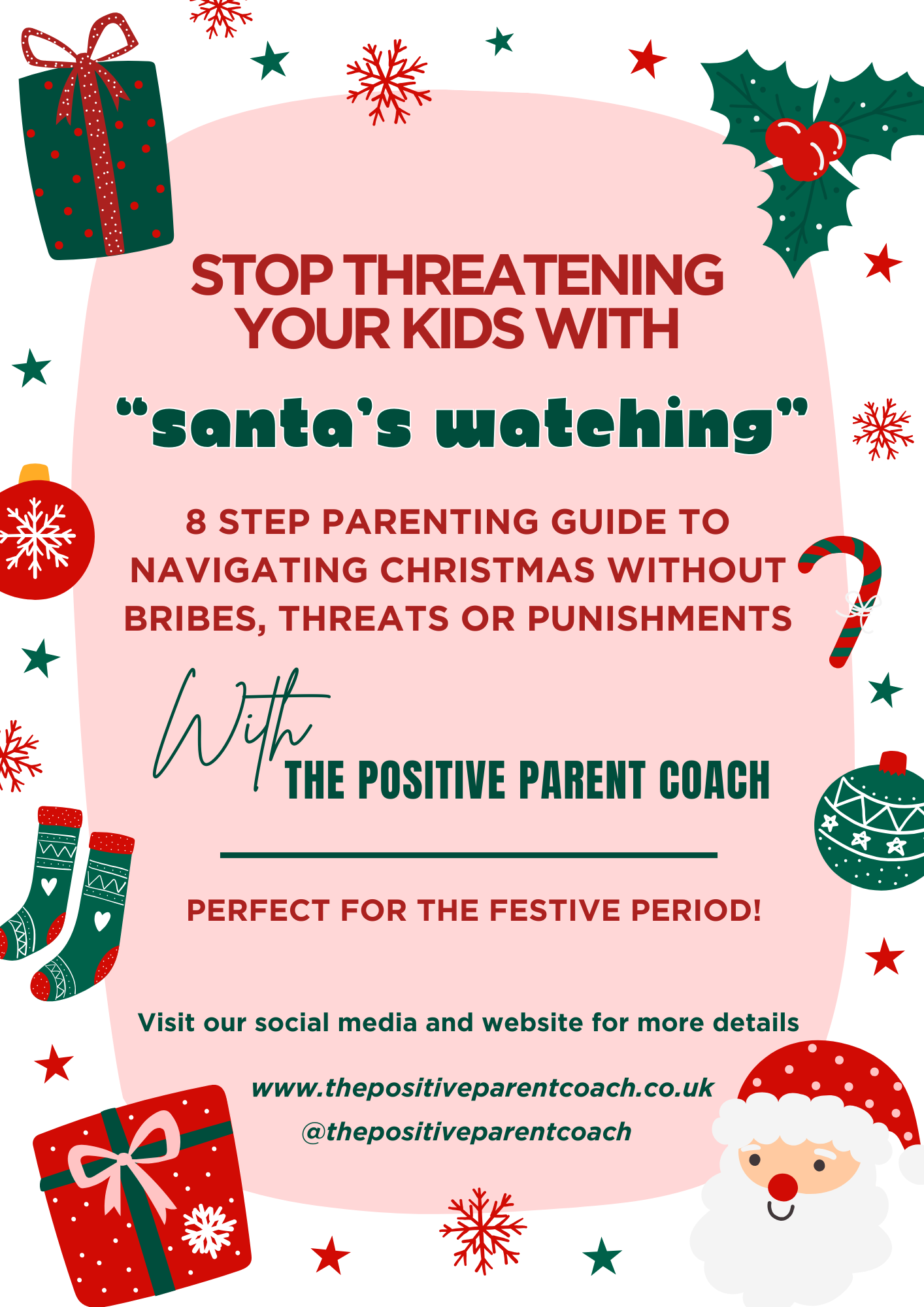
Grab my 8 Step Parenting Guide to Successfully Navigate the festive period below!
Build Emotional Resilience and Connection Not Fear!
Parenting Through Christmas Without Bribes, Threats or Punishment
Christmas doesn’t need to rely on reward charts, naughty lists, or threats to work.
I’ve created an 8-step positive parenting guide to help families navigate the festive period without:
Bribes
Threats
Punishments
The guide supports parents to:
Hold boundaries calmly
Reduce meltdowns and power struggles
Respond to behaviour with confidence
Protect the parent-child relationship
This approach builds emotional resilience not fear-based compliance.
👉 You can also join my mailing list for more positive parenting tips and free resources here:
https://tr.ee/ZWrJXYz_8I
Want Deeper Support With Positive Parenting?
If you’re ready to move beyond quick fixes and build lasting cooperation, my self-study positive parenting courseprovides step-by-step guidance to help you:
Parent calmly without shouting
Support emotional regulation
Build cooperation without rewards or punishment
Strengthen your relationship with your child
👉 Learn more here:
https://www.thepositiveparentcoach.co.uk/parentingcourse
If you’ve used “Santa’s watching,” you haven’t failed.
You’ve used the tools that were handed to you, tools many parents were raised with. Choosing a different approach doesn’t mean you were wrong. It means you’re evolving.
And that growth is one of the most powerful gifts you can give your child, at Christmas and beyond.